What is airsoft?
The complete guide
Airsoft is an honour-based tactical sport played by millions worldwide. Learn everything you need to know — from complete beginner to experienced player.
Airsoft — the sport that builds character
Airsoft is a tactical sport where participants use electric, gas or spring-powered replicas to fire plastic BB pellets, typically 6mm in diameter. Unlike paintball, a hit leaves no visible mark — what makes airsoft unique is that the entire game depends on the personal honesty of the participants. When you are hit, you call it yourself and leave the field. No referees, no cameras, no score tables — just your own integrity.
This makes airsoft something more than just a sport. It is a character test. Players who have been involved for years speak about airsoft as a school for life — it teaches teamwork, determination, trust and decision-making under pressure.
Airsoft in Estonia: The Estonian airsoft community is active and tight-knit. N.A.C. (Naissaare Airsoft Club) is one of the oldest and most respected organisers, running events at Loksa (Suurpea training ground) and Tallinn (Harku). See public events at naissaareairsoft.ee.
History of airsoft — how it all began
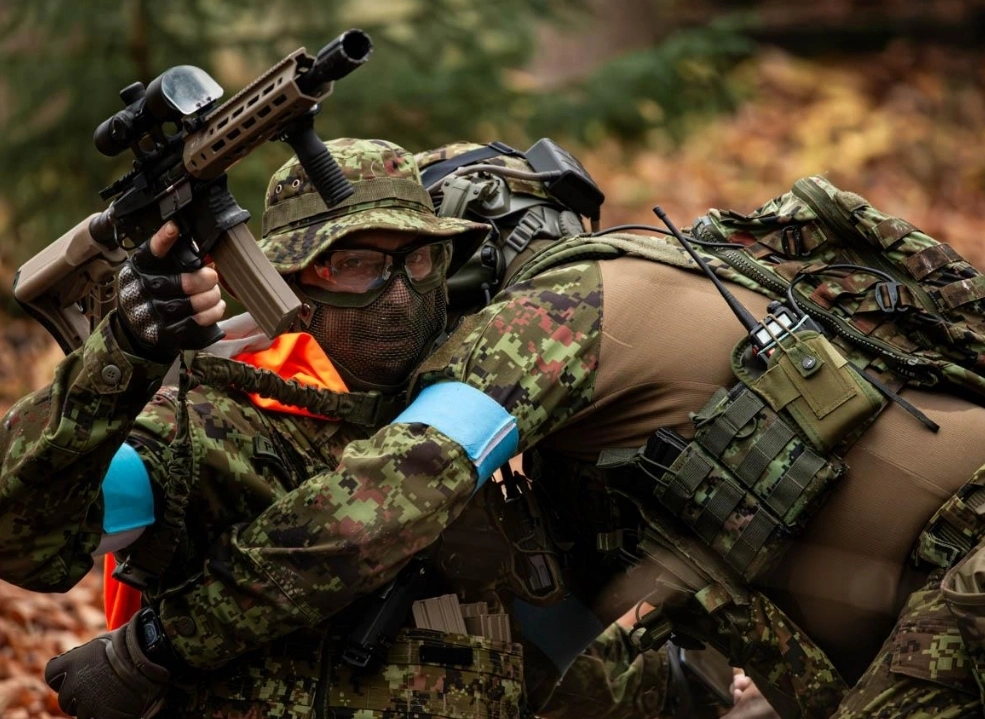
Airsoft originated in Japan in the late 1970s. The problem was simple: Japan had (and still has) some of the world's strictest firearms laws. People wanted the experience of precise replicas without legal risk. The solution was elegant — create replicas using soft ammunition designed purely for sport.
The first airsoft replicas were spring-powered. Gas-powered models followed, and electric automatic versions (AEG — Automatic Electric Gun) arrived in the mid-1990s and revolutionised the sport. Tokyo Marui, still the leading Japanese manufacturer, developed the AEG technology that remains the industry standard today.
Airsoft reached Europe in the late 1990s to early 2000s. Britain and Germany were pioneers, followed by other European nations. In Estonia, airsoft began developing actively in the mid-2000s when the first formal clubs formed and regular games began.
Today airsoft is played worldwide — across Europe, Asia, North America and beyond. International tournaments, mil-sim events and large games with hundreds of participants take place at world level. Airsoft has become a serious sport complete with professional equipment, training programmes and community structure.
How airsoft works — the core rules
The basic rules of airsoft are simple, but following them demands honesty and discipline:
Hit and acknowledgement: If a BB pellet touches your body or equipment (excluding the replica itself), you are hit. You call out loudly "HIT!" or raise your hand and leave the field to the respawn point. The specific ruleset of each game governs edge cases — what counts as a valid hit and what does not.
The "Airsoft!" call: When entering an unfamiliar area or for safety purposes, players use the call "Airsoft!" — a signal that this is sport, not real weapons. This is especially important in public areas or forests where there may be uninvolved passers-by.
Safety selector: The replica's safety must be on at all times when not in an active game. No shooting is permitted outside the game area or outside active game time.
Minimum engagement distance: Most games enforce a minimum distance below which shooting is not permitted (typically 5–10 metres), called MED (Minimum Engagement Distance). Firing at very close range can cause pain or injury.
Airsoft equipment — what you need
Airsoft equipment falls into three categories: replicas, protection and tactical gear. Each category matters, but you don't need to buy everything to start — which is why rental is so popular.
Replicas (AEG, GBB, spring)
AEG (Automatic Electric Gun) is the most popular type. AEGs use a battery and electric motor to fire semi-automatically or automatically. They are reliable, maintainable and available across a wide price range. For beginners, an AEG is the best choice.
GBB (Gas Blowback) replicas mimic the operation of real firearms — including blowback. GBBs are more realistic but more expensive and require more maintenance. They are popular among experienced players and in film production, where realistic movement is important.
Spring replicas must be manually cocked after each shot. They are cheap and reliable but slow. Typically used as sniper rifles or as beginner toys.
Eye protection — never skip this
Protective goggles are the single non-negotiable requirement in airsoft. Eyes are the most vulnerable part of the body and BB pellets travel at speeds up to 400 fps (feet per second) — roughly 120 metres per second. Therefore: never play without rated eye protection. At N.A.C. events, full-seal goggles meeting at least ANSI Z87.1 standard are required.
Tactical gear
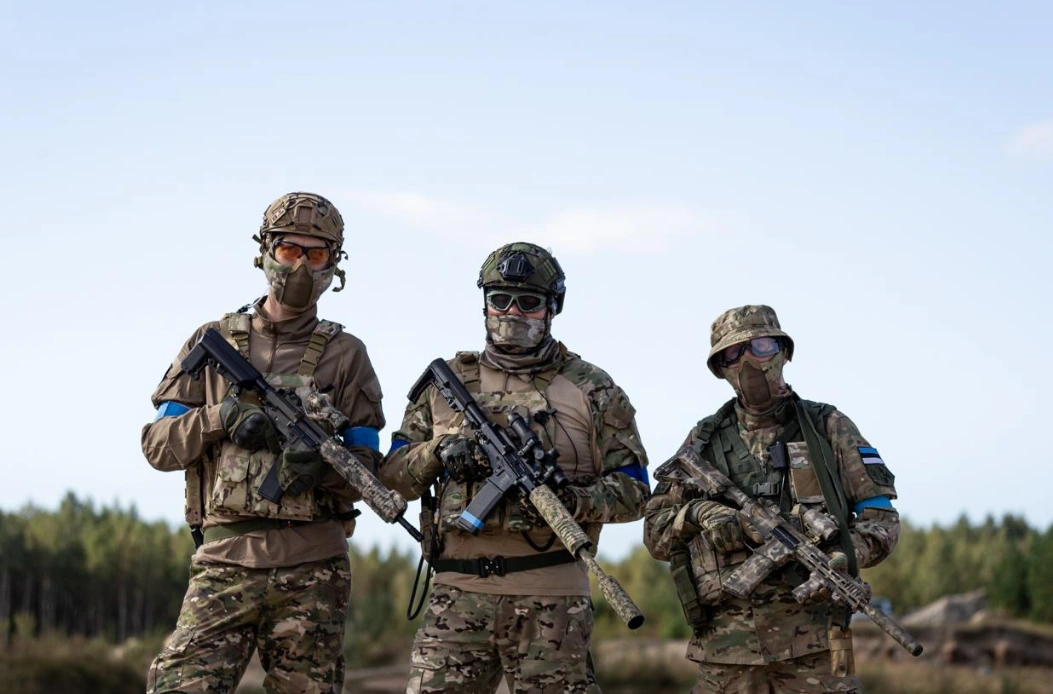
A vest (plate carrier or tactical vest) carries your equipment. The MOLLE system allows attachment of magazine pouches, radio, first aid kit and other necessities. A good vest makes the player look convincingly "tactical" — equally important for film work.
Airsoft game formats — something for everyone
Skirmish
Skirmish is the most common format — two teams play short rounds (5–15 minutes) with various objectives: capture the flag, assault the base, protect the VIP. Skirmish is fast, adrenaline-fuelled and accessible to all experience levels. Most N.A.C. events include skirmish rounds.
Mil-Sim (military simulation)
Mil-Sim events last several hours or an entire day. Participants are assigned roles and chain of command, scenarios are complex, and tactical play is emphasised. Mil-Sim players typically need realistic-looking equipment — our AEG rental replicas and tactical vests are ideal.
CQB (Close Quarter Battle)
CQB takes place indoors or in very dense terrain. Distances are short, the game is intense. CQB requires specific equipment — shorter replicas and definitely a face mask (not goggles alone). Estonia's unique climate makes indoor CQB events especially popular in winter.
Airsoft vs. paintball — key differences
- Hit visibility: Paintball leaves a visible mark; airsoft does not. Airsoft demands greater honesty.
- Pain level: A paintball hit is typically more painful than an airsoft BB at the same distance. An airsoft BB at proper range is a brief sting, not a heavy impact.
- Equipment realism: Airsoft replicas look exactly like real weapons. Paintball markers bear no resemblance to real firearms.
- Running cost: Airsoft is cheaper long-term — BBs cost less than paintballs and equipment lasts longer.
- Game style: Airsoft is more oriented toward tactical play; paintball often features faster, shorter sprint-style rounds.
Airsoft safety — the most important topic
Airsoft is a safe sport when played correctly. N.A.C. events enforce strict safety rules that all participants must follow:
1. Eye protection ALWAYS on. Goggles must never be removed anywhere in the game zone. Even when walking the field, keep them on until you reach the safe zone.
2. Direction. A replica must never be pointed at anyone outside active play. Maintain a safe direction at all times when not in a game.
3. Joule limit. N.A.C. games enforce a strict joule limit — AEGs max 1.3J, sniper rifles max 2.5J (with MED of 30m). This ensures hits are felt but cause no injury.
4. Chronograph check. All replicas are tested before each game. Any replica exceeding the limit may not participate.
Age limit: The minimum age at N.A.C. events is 13 years. Younger children may participate with a parent or guardian present and with their written consent. Protective equipment is mandatory for all participants regardless of age.
Getting started with airsoft
Airsoft is one of the easiest sports to begin. Here is a step-by-step guide:
1. Come to your first game with rental gear: You don't need to buy anything. Rent a complete kit from us (replica, protection, tactical gear) and come and play. This is the cheapest and simplest way to see if airsoft is for you.
2. Take it easy: At your first games, the most important things are following the safety rules and understanding the general flow of play. Don't worry about tactics — they come naturally.
3. Join the community: Airsoft players are typically very welcoming to newcomers. Ask for advice, talk to other players and learn.
4. Buy your own gear: After a few games you'll know what suits you. Then it makes sense to invest in your own replica. Recommended entry-level AEGs cost 100–250€ and last for years with proper care.
Ready to get started?
Submit a request and we'll help you rent the right equipment and find the right event.
Frequently asked questions
Airsoft is a safe sport when safety rules are followed. The most important thing is ALWAYS wearing rated eye protection. Hits can sting briefly but cause no injury when proper protective equipment is used at correct distances. At N.A.C. events, the organiser checks all equipment and briefs all safety rules before the game starts.
The minimum age at N.A.C. events is 13 years. Younger children may participate with a parent or guardian. All protective equipment is mandatory regardless of age.
No, all necessary equipment is available for rental from us. The rental includes replica, protective gear and tactical equipment. This is especially sensible if you are playing for the first time or organising a group event.
Yes. Airsoft replicas with energy not exceeding 3.5 joules are legal sporting equipment in Estonia. They are not classified as firearms under Estonian law. All our rental replicas are legal and comply with current requirements.
The main venues are Loksa (Suurpea) and Tallinn (Harku). Public events are listed at naissaareairsoft.ee. Further information is also available at airsoftwiki.ee.